1. Start from your sales channel and your date
A shop needs breadth in small quantities, an Amazon seller needs a few products under one brand, and a campsite needs a fit-out list for a fixed number of units. Write down the target retail price, the quantity you can sell in a season, and the countries you sell in. Then look at the calendar: camping sales in Europe build from April, so goods should arrive before then. Our how it works page has the order dates.
2. Find manufacturers, not only listings
Platforms show many near-identical offers, and plenty come from trading companies. Ask for the business licence, check the company’s age and export history, and ask for a video call from the production floor. If you plan to put your brand on a product, you want the manufacturer.
3. Compare quotes on delivered cost
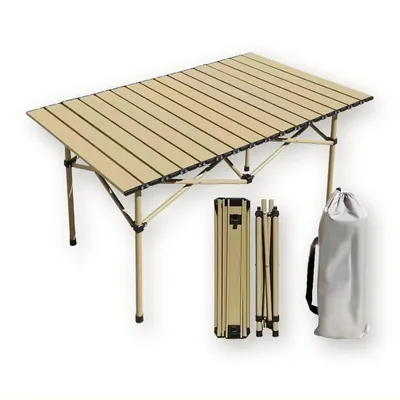
Send every supplier the same specification and ask for the price per piece, MOQ, packaging, carton size, gross weight and production time. Carton data matters more in camping than in most categories. Tents, cool boxes and folding furniture pay for space, so the cheapest unit price can become the most expensive delivered product.
4. Test samples as your customers will
Pitch the tent and spray it. Inflate the mat overnight. Sit on the chair at the stated load. Fill the flask. Keep one approved sample as the reference for production and inspection.
5. Agree terms in writing
Put the specification, packaging, labels, delivery date and quality standard in the contract. If you add your logo, approve a pre-production sample before mass production starts.
6. Inspect before the goods leave the factory
Fixing a problem in Europe is slow and expensive. A pre-shipment inspection checks quantity, workmanship, function, packaging and labels on a statistical sample (AQL). Pay the balance only after you have seen the report.
7. Choose the transport
Sea freight usually suits bulky goods, rail is a middle route for mixed orders, and air is for samples and urgent light goods. Lithium batteries ship as dangerous goods, and not every carrier or route takes them. Allow for space filling up before the factory holidays in January–February.
8. Customs, duty and VAT
The importer of record files the import declaration, pays customs duty according to the tariff code, and pays import VAT. You also need an EORI number. Duty varies by product, so check the code for each item before you calculate your margin.
9. Make the product legal to sell
Since 13 December 2024 the GPSR has applied to consumer products in the EU, and a product needs a responsible person in the EU before it goes on the market. Importers have their own duties under Art. 11. Food-contact items, batteries and electronics have further rules on top. Our quality page lists them by product type.
The alternative
If you would rather not be the importer, buy through an EU importer: you get an EU invoice, inspected goods and a delivered price. That is what we do. Send us your product list and compare it with your own calculation.